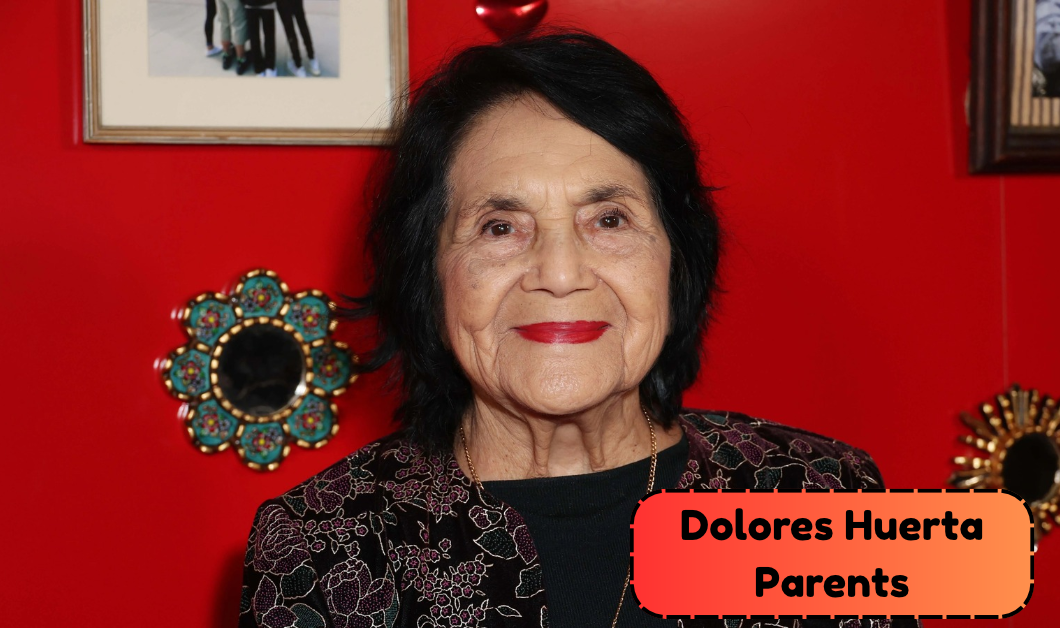
Dolores Huerta Parents: What Is Known About Her Father’s Political Career and Mother’s Business?
Dolores Huerta’s parents, Juan Fernández and Alicia Chávez, played a defining role in shaping the values of the celebrated American labor leader, who passed away on October 28, 2026, at the age of 96. Huerta died at her home in Bakersfield, California, following cancer, according to her family. Her passing has brought renewed attention to her remarkable career and the family background that inspired her lifelong commitment to workers’ rights, women’s equality, and social justice.
Born Dolores Clara Fernández in Dawson, New Mexico, Huerta grew up watching her father participate in labor organizing and her mother provide practical assistance to struggling families. Although her parents divorced during her early childhood, both influenced the beliefs that eventually made her one of the most important figures in the American civil rights movement.
Who Were Dolores Huerta’s Parents?
Dolores Huerta was the daughter of Juan Fernández and Alicia Saint John Chávez.
Her father worked as a coal miner, agricultural laborer, and union activist before entering politics.
Her mother was a businesswoman and community advocate who operated a restaurant and hotel in Stockton, California.
Both parents came from families with Mexican roots, and their experiences reflected the economic challenges faced by many working-class families during the early twentieth century.
Juan and Alicia separated when Dolores was approximately three years old.
Following the divorce, Alicia relocated with Dolores and her two brothers to California.
Despite growing up primarily with her mother, Huerta maintained contact with her father and later acknowledged his influence on her understanding of labor rights.
Dolores Huerta’s Father Juan Fernández
Juan Fernández was born in Dawson, New Mexico, into a family of Mexican immigrants.
He began his working life in physically demanding occupations, including coal mining and agricultural labor.
He also traveled for seasonal farmwork, harvesting crops in states such as Colorado, Nebraska, and Wyoming.
These experiences exposed him to the difficult working conditions faced by laborers.
Juan eventually became involved in union organizing and political activism.
In 1938, he was elected to the New Mexico state legislature.
His transition from manual labor to elected office demonstrated the possibilities of political participation for working-class communities.
He also continued his education and eventually earned a college degree.
Although Dolores spent much of her childhood away from him, she remained proud of his achievements.
His involvement in unions and politics provided an early example of how organized workers could seek better treatment.
Dolores Huerta’s Mother Alicia Chávez
Alicia Saint John Chávez was a businesswoman known for her independence, generosity, and involvement in community affairs.
After separating from Juan Fernández, she moved her children to Stockton, California.
During the Great Depression, Alicia worked as a waitress and cannery employee to support her family.
She eventually established herself in business, operating a restaurant before acquiring a hotel.
The hotel contained approximately 70 rooms and served people from different economic and cultural backgrounds.
Many of its guests were agricultural workers who struggled to afford accommodation.
Alicia frequently offered reduced rates and sometimes allowed people to stay without payment.
She also participated in civic organizations and community activities.
Her willingness to help people experiencing financial hardship became one of the strongest influences on her daughter.
Huerta later credited her mother’s independence and compassion with helping shape both her feminism and her commitment to nonviolent social change.
Why Did Dolores Huerta’s Parents Divorce?
Juan Fernández and Alicia Chávez divorced during the early years of their marriage.
Dolores was approximately three years old when the separation occurred.
The family was living through the economic difficulties associated with the Great Depression.
However, the precise personal reasons for the divorce have not been extensively documented.
Following the separation, Alicia assumed primary responsibility for raising the children.
She eventually settled in Stockton, where she found employment and established a stable home.
Dolores continued maintaining a relationship with her father despite the distance between them.
Her parents’ separate experiences exposed her to different aspects of working-class life.
From her father, she learned about organized labor and political participation.
From her mother, she witnessed the importance of economic independence and direct community assistance.
Dolores Huerta’s Childhood in Stockton, California
Dolores Huerta was born on April 10, 1930, in Dawson, New Mexico.
She spent most of her childhood and early adulthood in Stockton, California.
The city had a diverse population that included Mexican, Filipino, Japanese, Chinese, and African American working families.
Growing up in this environment introduced Huerta to people from different cultural backgrounds.
Her mother’s restaurant and hotel also brought her into contact with agricultural workers and other low-income residents.
These experiences helped her understand the challenges faced by families struggling with poverty.
Huerta attended Stockton High School, where she participated in extracurricular activities.
She was involved in the Girl Scouts and remained active in the organization until she was 18.
She also participated in school clubs and developed interests in music and performance.
However, she experienced racial discrimination during her school years.
Those experiences strengthened her awareness of inequality and influenced her later activism.
Did Dolores Huerta Have Siblings?
Dolores Huerta grew up with two brothers, John and Marshall Fernández.
The siblings moved to California with their mother following their parents’ divorce.
They shared responsibilities at home and later helped with the family’s businesses.
Their mother encouraged all her children to participate in household work rather than assigning responsibilities according to traditional gender expectations.
This approach contributed to Dolores’s understanding of equality between men and women.
The family also maintained connections with relatives who helped care for the children.
Huerta developed a particularly close relationship with her maternal grandfather, Herculano Chávez.
He encouraged her curiosity and recognized her ability to express herself.
Her childhood experiences within this extended family helped develop the confidence she later demonstrated as a public speaker and organizer.
How Dolores Huerta’s Parents Influenced Her Activism
The influence of Juan Fernández and Alicia Chávez became increasingly visible as Dolores Huerta entered adulthood.
Her father’s experience as a miner, farmworker, union activist, and legislator demonstrated the importance of collective political action.
Her mother’s business activities showed how individuals could directly support struggling families.
Together, these examples helped Huerta develop an understanding of economic injustice.
After completing her education, she briefly worked as a teacher.
She became deeply concerned after seeing children arrive at school hungry or without adequate clothing.
Huerta believed that improving their lives required addressing the economic conditions affecting their parents.
She eventually left teaching and became involved in community organizing.
In 1955, she helped establish the Stockton chapter of the Community Service Organization.
Her work focused on voter registration, economic opportunity, and reducing discrimination.
These efforts marked the beginning of a career that would transform agricultural labor organizing in the United States.
Dolores Huerta’s Career With César Chávez
Dolores Huerta became closely associated with fellow labor organizer César Chávez during the 1950s.
The two shared concerns about the working conditions experienced by agricultural laborers.
In 1962, they helped establish the National Farm Workers Association.
The organization later became part of the United Farm Workers.
Huerta played an important role in organizing workers, negotiating labor agreements, and coordinating national boycotts.
She became particularly associated with campaigns seeking higher wages, safer workplaces, and improved protections for farmworkers.
Her organizing efforts also contributed to the passage of California’s Agricultural Labor Relations Act in 1975.
Huerta became widely known for the phrase “Sí, se puede,” meaning “Yes, we can.”
Her achievements earned national recognition, including the Presidential Medal of Freedom in 2012.
Throughout her career, she continued advocating for women, immigrants, and economically disadvantaged communities.
Dolores Huerta’s Family and Personal Life
Dolores Huerta’s personal life included two marriages and a long-term relationship.
She married Ralph Head in 1948, and the couple welcomed two daughters before divorcing.
She later married Ventura Huerta, with whom she had five children.
Following their separation, she entered a relationship with labor organizer Richard Chávez.
The couple had four children together.
Huerta raised her family while participating in demanding labor campaigns and political activities.
Her responsibilities often required travel, organizing meetings, and extended periods away from home.
She acknowledged that balancing motherhood and activism involved significant sacrifices.
Her experiences as a mother also strengthened her interest in policies supporting working families.
The values she learned from her own parents remained important throughout these responsibilities.
Dolores Huerta’s Parents and Lasting Family Legacy
Dolores Huerta passed away on October 28, 2026, at her home in Bakersfield, California.
Her family confirmed her passing and requested privacy while mourning their loss.
She was remembered for her contributions to labor organizing, civil rights, and women’s equality.
Her achievements were closely connected to the lessons she learned during childhood.
Juan Fernández demonstrated the importance of organized labor and political participation, while Alicia Chávez provided an example of independence, generosity, and community responsibility.
Together, their influence helped shape Huerta’s understanding of social justice.
Although Dolores Huerta became internationally recognized for her activism, the foundation of her work began with the experiences and values of her parents.
Their legacy remains connected to the generations of workers and families whose lives she helped improve.